Postingan

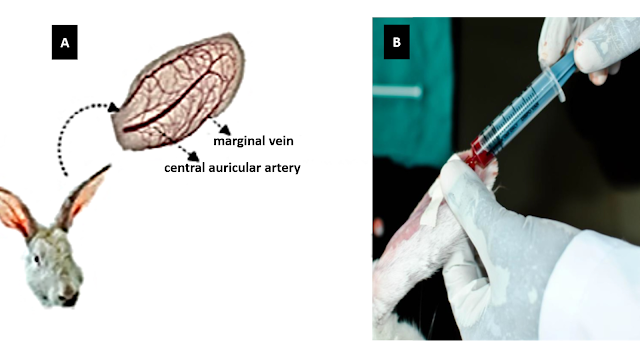
Protocol for Marginal Ear Vein / Artery Blood Sample Collection in Rabbit
Gambar
What volume of blood can be safely collected at any one time in a 2 kg pet rabbit? And how is this calculated? The maximum volume removed at any one time should not exceed 10% of the circulating blood volume. Total blood volume in a healthy rabbit range between 5.5-7% of body weight.  Therefore, in a 2 kg rabbit the total blood volume ranges between 110-140 ml and the maximum volume of blood that may be safely taken is 11-14 ml. A slightly lower volume may be prudent for juveniles, ill animals or suspected anaemic cases. Protocol for marginal ear vein / artery blood sample collection Requirements include animal, anesthetic agent, cotton, 26G needle, 95% v/v alcohol,  topical vasodilatator  (o-Xylene ), surgery blade and blood sample collection tube. The animal should be placed in a restrainer. Restrain rabbit securely with mechanical rabbit restrainer, towel wrap method or commercially available sacks. Ear is cleaned with 95% v/v alcohol an...

Antibiotic Toxicity In Guinea Pig

Gambar
The intestinal flora of the guinea pig, unlike that of most other animals, is predominantly gram-positive, and coliform organisms are not usually present in significant numbers. Narrow-spectrum antibiotics with antibacterial activity against gram-positive bacteria should be avoided, the cause of death is a decreased gram-positive bacterial flora and increased gram-negative flora, with related bacteremia/septicaemia. Antibiotics reported to cause enterotoxemia are penicillin, ampicillin, amoxicillin, bacitracin, erythromycin, spiramycin, streptomycin, tetracycline, oxytetracycline, lincomycin, clindamycin, vancomycin, cephalexin, cephalosporins. Some medications should never be prescribed; some can be injection but never orally. Topical antibiotics have also cause fatal enterotoxemia. If there are better alternatives, do not risk use of an injected antibiotic but use a safer one DeSomer et al. (1955) first clearly postulated that the lethality of penicillin ...

Diagnostic Parasitology: Fecal Samples (Common Floatation Solution for The Fecal Flotation Technique & Diagnostic Techniques)

Gambar
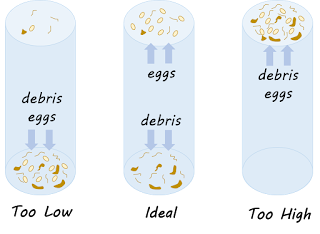
DIAGNOSTIC PARASITOLOGY: FECAL SAMPLES (Common Floatation Solution for The Fecal Flotation Technique & Diagnostic Techniques) Diagnostic of parasitic infection depends on several factors, such as collection of samples, transport of samples to laboratory, and method of laboratory evaluation. Feces must be fresh for accurate result . As feces age, a diagnosis is complicated because many parasite eggs develop and hatch into larvae.  Contaminants such as free-living soil nematodes, fly larvae, mites, and other arthropods often invade feces and complicate a diagnosis. At least 10 g of fresh feces should be collected. If samples are more than two hours old, samples should be stored at 4 degrees C until examined. Many parasite stages can be stored at 4 degrees C for at least two months with minimal development For routine shipment to laboratory , samples can be cooled to 4 degrees C and then packed with ice or other coolant (blue ice) for shipment via any of the 24- t...